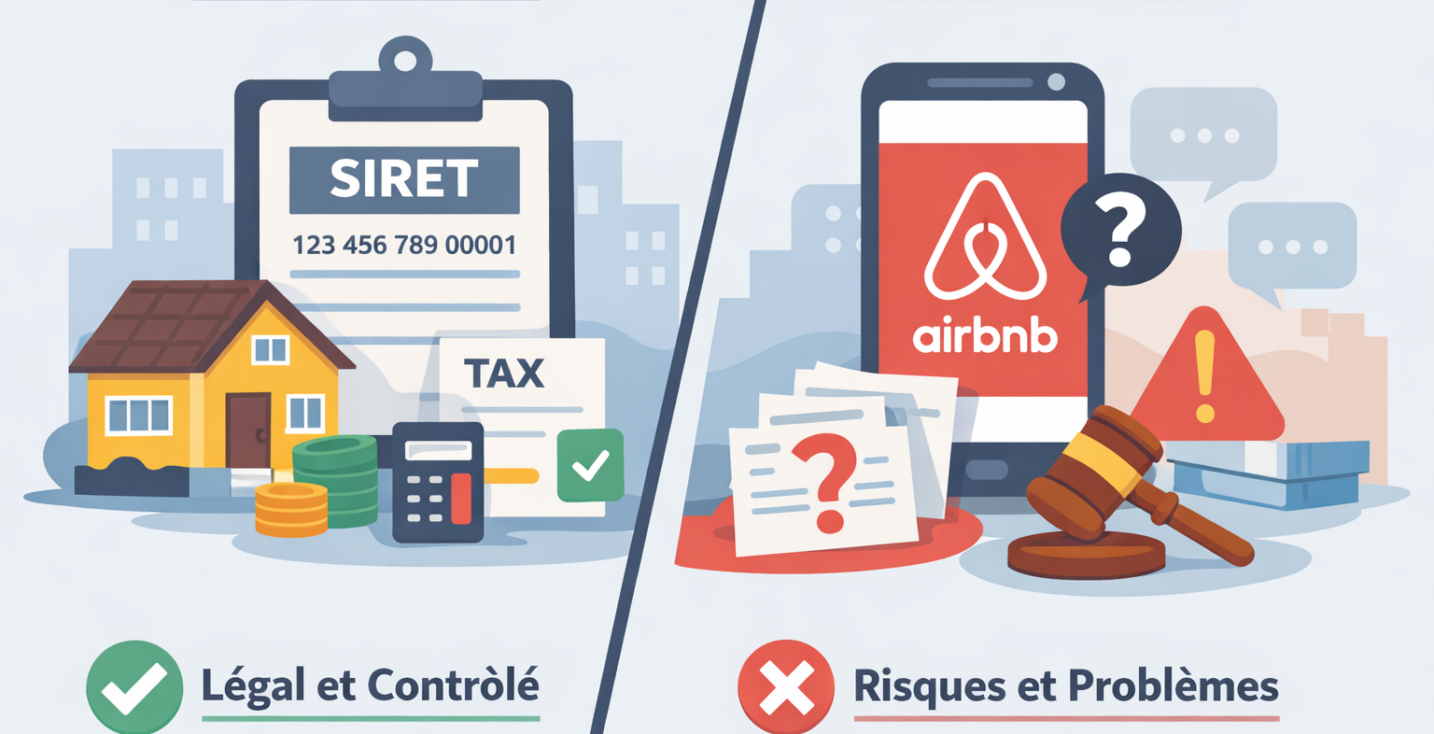
Why legally register your LMNP business (SIREN/SIRET) instead of “letting Airbnb manage it”?

We often hear: «I rent on Airbnb, they collect the tourist tax, they send me a recap... so that's enough.’
In practice, Airbnb (and other platforms) can manage a part of the traveller experience, but not the legal existence of your furnished rental activity in France.

And above all: registering LMNP (Guichet unique → SIRET/SIREN) is not just a formality “for the administration”. It's also what gives you the hand, It protects you and saves you from a number of nasty surprises.


LMNP: it's not a “status”, it's a declarable activity

LMNP describes a furnished rental activity carried out on a non-professional basis. Since 1 January 2023, LMNP activity has required a online registration via the formalities desk and obtaining a SIRET number (in 15 days from the start of the rental period).

In practical terms: even if you only rent on Airbnb, registration doesn't just happen“.


What Airbnb does... and what Airbnb will never do for you

Airbnb can

  • provide you with documents and summaries,
  • apply certain platform-related rules,
  • and, above all, to collect/transmit tax information under DAC7 (EU).

Airbnb cannot (and must not)

  • declare the start of your LMNP business,
  • choose your tax system (micro-BIC vs réel),
  • managing your off-platform tax obligations“ (e.g. CFE, consistency of declarations),
  • or secure your business if you also rent via Booking/Abritel/direct.

On impots.gouv.fr, the authorities are very clear: registration is used in particular to obtain a SIRET, publicise the existence of the business, and indicate the tax regime chosen.


The real advantages of having a SIREN/SIRET (and of doing it early)

1) You're square (and you sleep better)

The number one benefit is peace of mind: you declare your activity, you obtain your identifiers, and you take the steps required by the authorities (including the 15-day deadline).

2) You regain control over your tax situation (and often your profitability)

The “sinews of war” in LMNP is the tax choice and its implementation (micro-BIC vs réel, charges, depreciation, etc.).
Without your own registration, you are more likely to :

  • choose the wrong frame,
  • choose it too late,
  • or find yourself having to “catch up” on items when you file your tax return.

And this rarely has a neutral effect on the result.

3) You put your case on a professional footing (bank, accountant, insurance companies, partners)

A SIRET is a simple “marker”: your business exists, it is identified, and your file becomes much easier to read when a third party asks you for information (accountant, bank, service provider, etc.).

4) You are no longer dependent on a platform

Today Airbnb, tomorrow :

  • Booking,
  • Abritel,
  • your site,
  • or direct bookings.

Your SIRET does not change your marketing strategy.

5) You are consistent with the reality of 2023+: platform transparency is increasing (DAC7)

DAC7 requires Airbnb to collect and transmit tax information on hosts receiving income via the platform. To put it plainly: “I'm not doing anything” makes less and less sense.


The (very real) disadvantages of not doing so

1) You put off doing something you have to do... and you often end up doing it in a hurry

The most common situation is that you wait until “later” and then have to regularise the situation at the wrong time (tax return, change of platform, request for supporting documents, etc.). But the obligation + the 15-day deadline exist.

2) You potentially lose money (wrong tax choice, wrong implementation)

The No. 1 risk is not the immediate fine: it's the loss of earnings (incorrect engine speed, non-optimised loads, framing errors).

3) You are exposing yourself to tax inconsistencies (CFE, returns, supporting documents)

Furnished lettings come with a number of obligations, including CFE (with exemptions in certain cases, notably where receipts are ≤ €5,000).
Airbnb doesn't manage this “for you”, and the day it drops, it becomes your subject.

4) Your “strategy” is based on a belief: “Airbnb = compliance”.”

Airbnb can do useful things, but the tax authorities point out that obtaining a SIRET and declaring that they are starting up their business.


OK... and how do we do it?

For the practical part (the right choices to tick on the Guichet unique INPI, step by step), we have detailed everything here:

👉 Setting up your LMNP business on the Guichet unique (INPI): which options to choose, step by step


Conclusion

Registering as an LMNP is not about “pleasing the authorities”. It's about :

  • comply,
  • secure your income,
  • keep control of your tax affairs,
  • and not be dependent on a platform whose rules may change.

Concierge fees: when, how and why should they be deducted from tax?

Do you pay for concierge services (cleaning, check-in/out, traveller management)? Here's when and how to deduct your CLM concierge fees, depending on your tax regime (micro or actual) for furnished or unfurnished accommodation.

You entrust your property to CLM Conciergerie (or another...) to save time, improve the passenger experience and make your operations more secure. The good news is: in many cases, caretaker costs are tax-deductible... as long as you have the right tax regime and keep the right supporting documents.

This article explains why, when and how deduct your caretaker costs (management, cleaning, linen, consumables, etc.), with simple, up-to-date benchmarks.

⚠️ Useful note: this article is for information only and does not replace the advice of a chartered accountant or the tax authorities.

1) Why deduct concierge fees?

Deducting a charge means reduce your taxable income, so often pay less tax and social security contributions (depending on your situation).

In short-term rental, caretaker costs can quickly become a major expense:

  • travel management and communication,
  • check-in / check-out,
  • cleaning, laundry / linen,
  • small supplies (reception, consumables),
  • coordination of work, light maintenance.

If you are at actual regime, These expenses are deducted from the taxable income (and may, depending on the circumstances, contribute to a very low or even zero taxable income, thanks to all the expenses and depreciation for furnished accommodation). The general principle on the real BIC side is as follows deduction of expenses and management costs related to the operation.


2) The key point: your tax regime (micro vs real)

It is the diet which determines whether you can deduct your CLM expenses “to the penny”.

A) You are under the “micro” scheme: no actual deduction

  • Visit micro-BIC (furnished rental), the administration applies a lump-sum allowance and you don't deduct your expenses one by one. It's there in black and white on Service-Public.
  • Visit micro-foncier (bare rental), same logic: flat-rate allowance and no deduction of actual expenses.

✅ Conclusion : at the microphone, your caretaker costs are “covered” by the allowance... but you do not deduct them specifically.

B) You are on a “real” tax regime: yes, concierge fees become deductible

  • Visit Furnished property (BIC réel) You deduct operating expenses (including management costs) in accordance with BIC rules.
  • Visit actual bare-rental (income from property) management/administration costs relating to the property are deductible under the actual scheme.

✅ Conclusion : real, CLM costs (management, cleaning, linen, etc.) are in principle deductible if they are incurred for the rental activity and justified.


3) When is the deduction most attractive?

In practice, the deduction of caretaker expenses is particularly attractive if :

1) You have a lot of charges

If your expenses (caretaking + cleaning + linen + loan interest + insurance + property tax + condominium tax + etc.) exceed the micro deduction, the real is often more favourable.

2) You are renting out unclassified tourist accommodation

Since the recent changes, the taxation of tourist rentals has changed: for a unclassified furnished tourist accommodation, the micro can apply a allowance of 30% (instead of a higher allowance previously), which makes the real more attractive for many homeowners.

Remember: the more your concierge service costs (and your overall costs), the more the actual regime becomes relevant.


4) How do you actually deduct your CLM concierge fees?

Step 1 - Identify your type of rental

  • Furnished rental (short-term, Airbnb/Booking/Abritel, etc.) → category BIC (micro-BIC or real)
  • Bare rental → category land incomes (micro-foncier or réel)

Service-Public clearly explains the “furnished = BIC / unfurnished = land” logic.

Step 2 - Register (or switch) to the actual regime if you want to deduct by the penny

This is condition no. 1: CLM costs are deducted from expenses on an actual basis.

Step 3 - Keep the right supporting documents

To secure your deduction :

  • CLM invoices (or detailed statements),
  • proof of payment (bank transfers, direct debits, etc.),
  • details if possible: management / cleaning / laundry / interventions,
  • supplier invoices if you have them directly,
  • platform commission statements (Airbnb/Booking, etc.) if relevant to the actual situation.

Tip: if CLM deducts certain amounts directly from your payments, it's not a problem the important thing is to have clear justification (invoice / statement) and a traceability.

Step 4 - Deduce “the right thing”.”

A few simple guidelines:

  • What you actually pay to CLM = actual deductible expense (if linked to the operation).
  • What is billed to the passenger Depending on the set-up, this may be an “income + expense” flow. The important thing is to be coherent and justified (your accountant will give you a clear picture).

5) What CLM costs are generally involved?

Depending on your contract and the way you operate, you will often find :

  • Management/concierge fees (management, passenger relations, coordination)
  • Cleaning (services between stays)
  • Linen / laundry (purchase, hire, dry cleaning, maintenance)
  • Reception consumables (if billed to the owner)
  • Minor repairs / light maintenance (if invoiced)

The idea: expenditure must be undertaken in the interests of the rental business and correctly justified.


6) Quick FAQ (the questions we get asked all the time)

“I'm on micro-BIC: can I still deduct CLM?”

No: micro-BIC, the allowance replaces the deduction of your expenses.

“I rent unfurnished: is it the same?”

Micro-foncier status, no actual deductible expenses ; under the actual scheme, management costs relating to the property may be deductible.

“At what point is it worth going real?”

This is often the case when your annual expenses (including caretaking) become significant, rather than the micro allowance, or as soon as you are “forced” to do so by the thresholds/rules applicable to your type of letting. The parameters for furnished tourist accommodation have changed recently, so it's best to carry out a simulation.


Conclusion

  • Micro = simple, but no detailed deduction.
  • Real = more follow-up, but (often) very advantageous deduction for homeowners who pay a caretaker and have high charges.

If you are a CLM homeowner, we can help you to structure your supporting documents (invoices/statements) so that your accountant has a clean file and you can optimise your tax situation in full compliance.

Need a quick update on your case (micro vs real)? Contact us, We'll show you what you'll need to gather for a simulation.

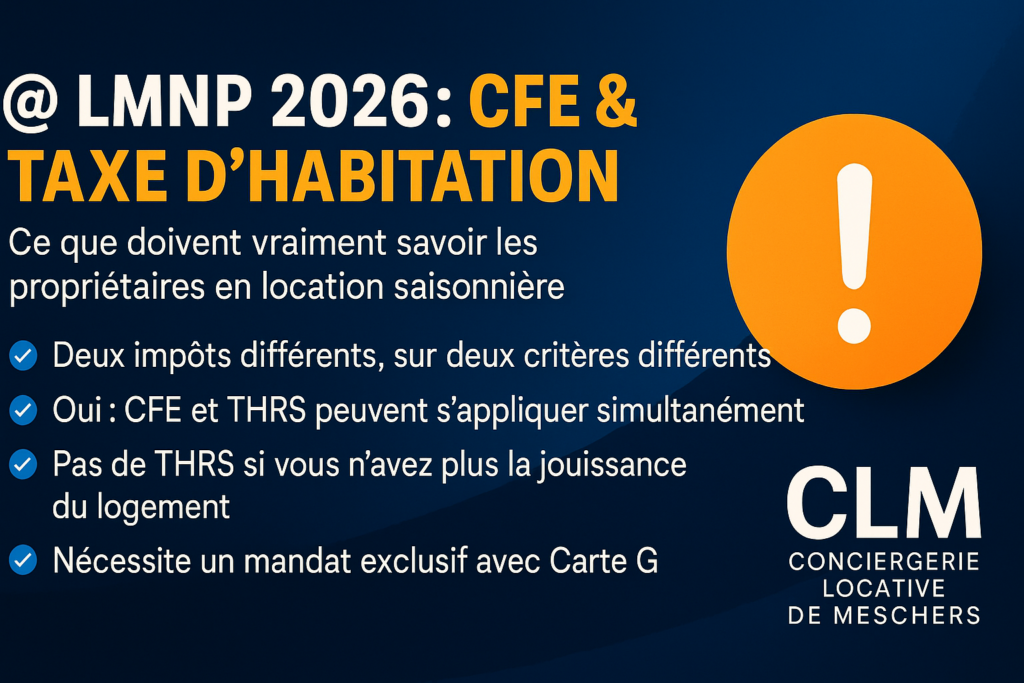
LMNP 2026: CFE & Council Tax (THRS)

What holiday rental owners really need to know

With recent tax changes, many homeowners are wondering whether they should pay :

  • the CFE (Cotisation Foncière des Entreprises),
  • the Council tax on second homes (THRS),
  • or sometimes both.

Online discussions often add to the confusion. So here is a clear, up-to-date version, based on the ministerial responses of 3 June 2025 and current tax doctrine.


1️⃣ CFE and THRS: two different taxes for two different purposes

✔ CFE

The CFE concerns furnished lettings.
It is payable by anyone operating a furnished property, including those operating a LMNP scheme.

There are, however, some possible exemptions:

  • rental income < 5,000 per year,
  • 1st year in business,
  • exemptions decided by the municipality,
  • specific zones (FRR).

✔ THRS (Council tax on second homes)

THRS applies if the owner retains the right of use on 1 January.

That's the crux of the matter:
👉 It's not the number of days rented that counts,
👉 But the possibility of using the accommodation, even rarely.

If you are free to dispose of it, even theoretically, THRS is due.


2️⃣ Yes: CFE and THRS can be applied simultaneously

This is even the situation the most common as a seasonal LMNP.

The two taxes are not linked:

  • CFE taxes the activity,
  • THRS taxes the use of the property.

3️⃣ Can I avoid paying council tax (THRS)?

Yes, in just one case:
👉 if the owner does not retain the use of the property at all.

And this can only be the case :

✔ If the dwelling is entrusted in EXCLUSIVE MANAGEMENT MANDATE

to a professional holder of the G (Hoguet law).

This is the only situation recognised by the tax authorities in which :

  • the owner can no longer use the property,
  • personal use is contractually impossible,
  • enjoyment is transferred to the property manager.

👉 So :

Without a G card = inability to sign an exclusive mandate = the THRS remains due.


4️⃣ What you can't get from a concierge service without a G Card

A concierge service like CLM :

  • does not manage rents,
  • does not draw up a lease,
  • cannot be a rental agent,
  • does not have the legal personality to withdraw use from the owner.

This means that :

❌ It cannot not make you eligible for exemption from THRS.

✔ On the other hand, it can help you understand your LMNP obligations.

This is essential to avoid any ambiguity for owners.


5️⃣ Common mistakes on the internet (and corrections)

❌ “If I rent for 120 days or more, I no longer have to pay council tax.”

➡️ False.
The 120 days concern the registration number, not THRS.


❌ “You have to rent 365 days to avoid THRS.”

➡️ False.
It's not the activity that counts,
but the impossibility of personal use.


❌ “A concierge service can act as an exclusive agent.”

➡️ False if she does not have a G card.
(This is the case for almost all concierge services in France).


6️⃣ What CLM can actually do (and what the law forbids)

CLM can :

  • explain the THRS / CFE rules to you,
  • help you understand your LMNP obligations,
  • help you organise your rental property,
  • managing the operation and quality of housing,
  • optimise your income,
  • help you with your administrative formalities non-financial,
  • advise you objectively on your options.

CLM cannot :

  • manage your rent,
  • sign a rental management agreement,
  • withdraw use of the property,
  • make you eligible for THRS exemption.

This is a legal requirement under the Hoguet Act.


7️⃣ Clear summary: who pays for what?

SituationCFETHRS
Owner retains use of the property✔ Yes✔ Yes
Owner waives use (exclusive mandate Carte G)✔ Yes❌ No
Income < €5,000/year❌ No✔ Yes if used
Rental of part of the principal residence❌ No❌ No
Concierge service without a G card✔ Possible management✔ THRS due

8️⃣ Conclusion

In most cases for holiday lets:

  • CFE is payable (with possible exemptions),
  • THRS is payable as soon as the owner is able to use the property,
  • only an exclusive mandate entrusted to a professional Carte G can be used to remove this THRS.

CLM can help you understanding your obligations, We'll help you optimise your LMNP tax position and manage your business with peace of mind - while complying strictly with the Hoguet Act.

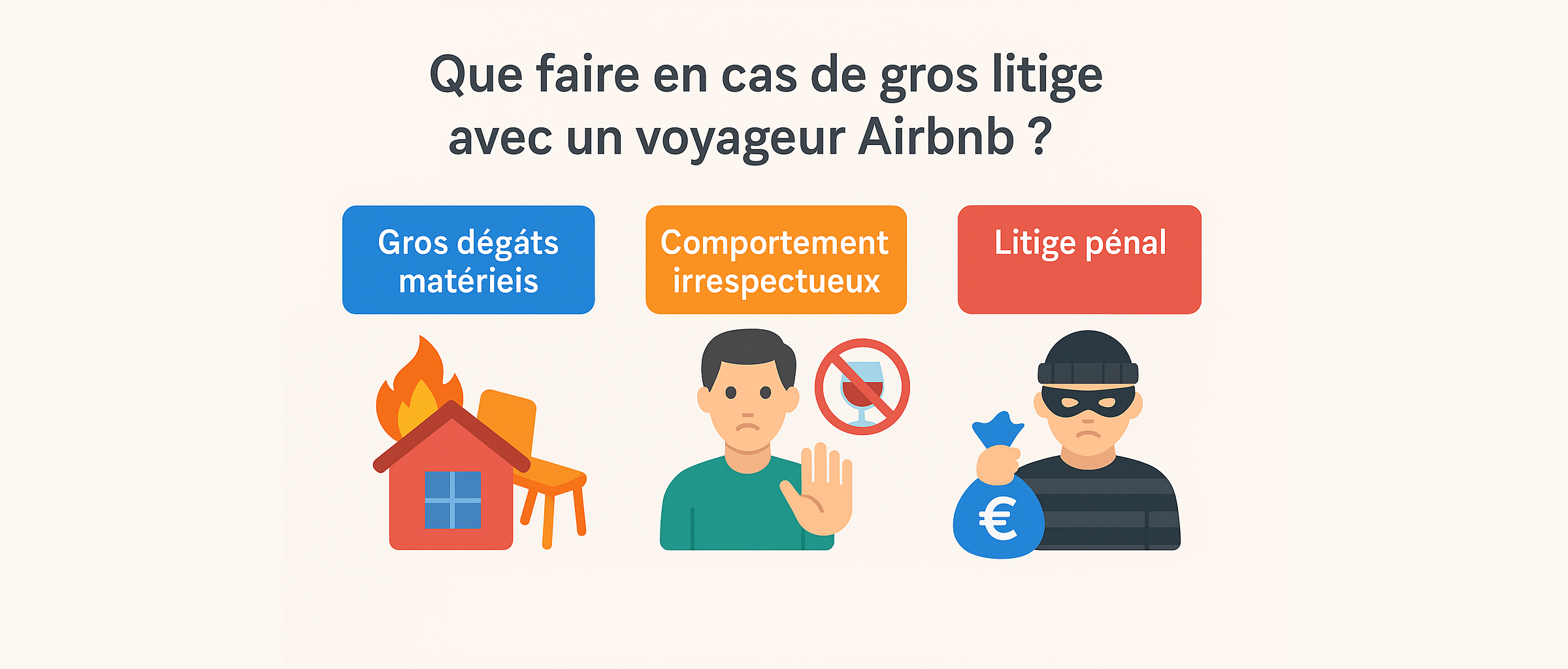
What to do in the event of a major dispute during an Airbnb rental?

Full guide: immediate action, special cases, procedures, and how to prevent it happening again

Over 95 % of Airbnb stays go off without a hitch.
But when a dispute serious damage to property, dangerous behaviour, theft, squatting - it's essential to know what to look out for. what to do immediately, who can help, and how to prevent it from happening again.

This guide offers you a simple, effective and clear method for dealing with every situation.


🧭 Understanding the 4 types of serious disputes.

Airbnb disputes are handled differently depending on their nature.

There are 4 categories:

  1. Major property damage
  2. Dangerous or disrespectful behaviour
  3. Criminal litigation (theft, wilful damage, threats)
  4. Squatter / refusal to vacate

Each category has its own procedure.


1️⃣ CASE 1 - Major property damage

(Destroyed furniture, leak, fire, broken appliances, water damage, etc.)

👉 1. Diagnose in seconds

  • Is the damage visible?
  • Is it the traveller's fault?
  • Or a feature of the property (breakdown, obsolescence)?

👉 2. Secure immediately

  • turn off the water in the event of a leak
  • turn off the electricity if there is a risk
  • isolate the damaged area
  • ventilate in case of smoke

The goal: prevent the damage from getting worse.

👉 3. Document like a professional

Airbnb does not compensate never without evidence.

Take :

  • clear, dated photos
  • videos showing the context
  • before/after if available
  • list of affected objects

👉 4. Declaring actual cause

✔ If the traveller is responsible

  • open an Airbnb folder (AirCover) within 72 hours
  • provide all evidence immediately
  • if booking direct: contact the traveller's home insurance (holiday cover)

✔ If the accommodation is involved (dilapidated condition)

  • declaration to the PNO (homeowner's insurance)
  • it covers the leak, faulty installation, etc.

👉 5. Which solution should be applied?

  • small breakage → deposit
  • average damage → Airbnb AirCover
  • major damage → homeowner's insurance (PNO)

2️⃣ CASE 2 - Dangerous or disrespectful behaviour

(Parties, nuisance, light squatting, failure to comply with rules, etc.)

👉 1. Quickly assess the situation

  • Does the traveller cooperate?
  • Is there any immediate danger?
  • Are neighbours affected?

👉 2. Contact the traveller

A firm but calm message.
In 50 % of cases, the situation is resolved immediately.

👉 3. intervene if necessary

Physical presence (or that of your concierge):

  • soothes
  • shows that
  • avoids escalation

👉 4. Contacting Airbnb: what they manage well

When it comes to problematic behaviour, Airbnb is more efficient than material damage.

Airbnb can :

  • call the passenger directly
  • cancel the rest of your stay
  • ask the traveller to leave
  • block your account if necessary
  • authorise additional cleaning costs
  • cover minor party-related damage

Airbnb is often on the host side, if you have :

  • evidence
  • messages
  • clear house rules
  • complaints from neighbours

👉 5. Proving nuisance

  • sound videos
  • photos
  • messages from neighbours
  • exchanges with the traveller

👉 6. Use the deposit

For :

  • exceptional cleaning
  • damaged linen
  • broken furniture

3️⃣ CASE 3 - Criminal litigation

(Theft, wilful damage, threats, breaking and entering)

These cases are rare but must be treated immediately.

👉 1. Making your home more secure

  • change the key box code
  • close all exits
  • shut down sensitive systems
  • prevent access

👉 2. Taking evidence

Like a mini “statement”:

  • detailed photos
  • videos
  • before/after inventory
  • purchase invoices if available
  • testimonials from neighbours

👉 3. Declare to Airbnb

These files are sent to the Trust & Safety, specialising in serious cases.

👉 4. Making a complaint

It's essential.
Even for a small stolen item, the complaint :

  • lends credibility to the case
  • sometimes allows Airbnb to be reimbursed
  • is required for voluntary cases

🔥 Special cases (the most sensitive)

🟥 1. Theft without breaking and entering

(the traveller had normal access and takes an object with him)

❗ What you need to know

No insurance covers this case.
But you are not without recourse.

✔ Exact procedure:

1. Essential evidence

  • before/after inventory
  • photos
  • proof that no one else entered

2. Filing a complaint
This is essential if Airbnb is to take the case seriously.

3. Wording to be sent to Airbnb :

“The traveller had exclusive access to the accommodation. The object present on arrival disappeared on departure. No other person had access to the accommodation. Complaint lodged - PV attached.”

4. Deposit
For small items (linen, crockery).

✔ Realistic result

  • Small thefts → deposit
  • Clear“ objects → AirCover sometimes
  • Major theft → police + Airbnb (rare)

🟥 2. Deliberate damage

(Deliberate hole, tag, piece of furniture broken on purpose)

❗ What you need to know

Intentional acts are rarely insured.
But Airbnb can refund if the file is solid.

✔ Procedure:

1. Document as a statement of fact

  • close-ups
  • videos
  • precise descriptions

2. Mandatory complaint

3. Airbnb wording :

“The damage is clearly intentional - complaint lodged. Evidence attached. Claim for compensation for wilful damage.”

4. Deposit
Useful as a supplement.

5. For major damage → PNO
For structural damage.


4️⃣ CASE 4 - Squatter / refusal to vacate the premises

(The stay is over, but the traveller remains)

This is the most stressful situation, but it has a clear procedure.

👉 1. DO NOT make a legal error

Do not :

  • forced entry
  • put your stuff outside
  • turn off water/electricity
  • change the lock while the traveller is inside

➡ Legal risk for the owner.

👉 2. Tracking everything on Airbnb

  • remind you of the official end time
  • signal that the traveller remains
  • refuse any “cash off platform” proposal”

Airbnb messages = legal evidence.

👉 3. Report to Airbnb immediately

Airbnb can :

  • call the traveller
  • cancel the holiday
  • request immediate departure
  • block your account
  • guide you legally

👉 4. in France: “occupation without right or title”.”

If the traveller really refuses to leave :

1. Report (photos / video)
2. Filing a complaint for illegal occupation
3. Contact ADIL / lawyer
4. Legal procedure if necessary

These are very rare cases, but they are regulated by law.

👉 5. Role of the concierge

  • Airbnb contact management
  • evidence gathering
  • on-site intervention
  • legal support (guidance)
  • securing the premises as soon as they are vacated

5️⃣ How can these situations be prevented from recurring?

(Prevention = 90 % of tranquillity)

✔ Check traveller profiles

✔ Demand clear rules

✔ Communicating before the trip

✔ Have a complete inventory

✔ Manage entries and exits

✔ Check the accommodation after each stay

✔ Regularly maintain the home


6️⃣ How a concierge service really helps

A serious concierge service to help you:

Before

  • passenger screening
  • inventory
  • rules
  • communication

For

  • rapid intervention
  • Airbnb management
  • documentation
  • mediation
  • securing

After

  • insurance follow-up
  • assistance with filing a complaint
  • repairs
  • prevention for future holidays

🎯 Conclusion

Even the most serious disputes can be managed effectively if the right steps are taken:
secure, document, declare, choose the right procedure, and prevent for the future.

With serious management, the vast majority of these situations can be avoided.

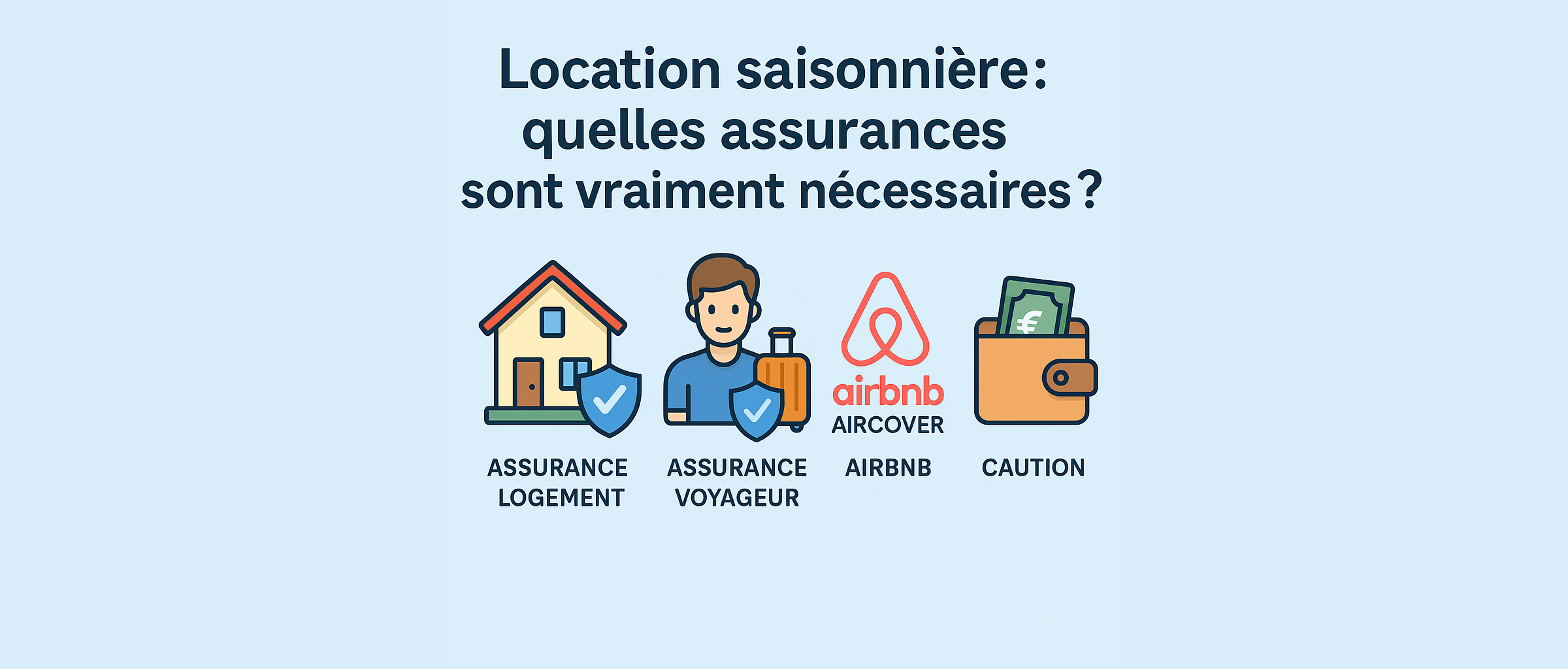
Seasonal lettings: what insurance do you really need to be well covered?

(PNO, traveller's insurance, Airbnb AirCover, deposit... simply explained)

Renting accommodation on a seasonal basis or on Airbnb very quickly raises an essential question:

👉 “If a passenger damages something, who pays? And what does insurance really cover?”

Between the PNO, the traveller's home insurance, AirCover, Booking or the deposit, it's hard to find your way around.


1️⃣ Homeowner's insurance: PNO (Propriétaire Non Occupant)

It is the most important insurance for owners of holiday lets.
It covers the home when it is rented, vacant or occupied by someone else.

✔️ What a PNO covers

  • water damage
  • fire, explosion
  • defects in the property (old appliances, faulty electrical installation, etc.)
  • damage to neighbours
  • burglary (⚠️ not theft by tenant)
  • outdoor vandalism
  • owner's civil liability

❌ What the PNO does not cover

  • theft committed by the traveller
  • deliberate damage
  • linen, crockery, decoration
  • a little everyday breakage (see deposit)
  • damage caused by the tenant (covered by their insurance)

👉 This is the insurance that protects the dwelling itself.


2️⃣ Traveller's insurance: “holiday” insurance”

Most home insurance policies also cover holidays.
This is known as holiday guarantee.

It covers accidental damage caused by the traveller.

✔️ What travel insurance covers

  • fire started by mistake
  • water damage caused by mishandling
  • furniture broken by accident
  • unintentional staining or damage
  • damage caused to neighbours (e.g. leakage to the flat below)

❌ What the holiday does not cover

  • theft committed by the traveller
  • deliberate damage
  • normal wear and tear or defects in the dwelling
  • leaks from old appliances
  • electrical installation problem

👉 It is the insurance that covers the traveller's liability, not the accommodation.

🔍 IMPORTANT :

The resort works whatever the channel (Airbnb, direct, Booking...),
but certificates can only be requested for direct bookings.


3️⃣ Airbnb AirCover: useful, but clearly limited

Airbnb highlights AirCover, presented as protection “up to 3 million”.

But be careful:
➡️ This is not insurance.
➡️ Airbnb can accept... or refuse according to its own rules.
➡️ No legal recourse.

✔️ AirCover works well for :

  • damaged bedding
  • small broken items
  • very dirty cleaning
  • obvious damage

❌ AirCover works very poorly for :

  • theft by the traveller
  • major damage
  • structural damage (leaks, electricity, obsolescence)
  • unbilled items
  • deliberate damage
  • “normal wear and tear” (a word much used to refuse)

👉 AirCover = a little extra, not at all a reliable insurance system.


4️⃣ Booking: no insurance included

Booking does not provide no cover for homeowners.

If there is a problem, management is based on :

  • the PNO
  • the deposit
  • discussion with the traveller

5️⃣ The deposit: essential for minor breakages

The deposit is the practical addition insurance.
It covers :

✔️ Minor breakage or loss

  • tableware
  • glasses
  • missing linen
  • small decorative element
  • abnormally dirty household

❌ The deposit never covers

  • extensive damage
  • major losses
  • major theft
  • housing damage
  • fire / water damage

👉 It is only used for immediate costs, uninsurable.


6️⃣ Clear table: who covers what?

SituationTravel insuranceOwner's PNOAirbnb AirCoverDeposit
Furniture broken by accident✔️⚠️ possible✔️
Very dirty cleaning✔️
Missing linen / broken crockery✔️
Leak linked to an old appliance✔️
Fire caused by the passenger✔️✔️ supplement⚠️
Appliances damaged by obsolescence✔️
Theft by the traveller❌ (excluding break-ins)⚠️ very rare
Deliberate damage⚠️ rare

7️⃣ What about CLM's RC Pro?

CLM's professional liability policy does not cover the traveller's actions, but it does cover professional errors :

✔️ Covered by CLM

  • door not properly closed by an agent
  • window left open
  • key box code not changed
  • lost keys
  • failure to comply with entry/exit protocol

❌ Not covered

  • theft or breakage by the traveller
  • damage caused by the traveller
  • home-related claims

👉 CLM protects against its own mistakes, never the traveller's.


8️⃣ The best protection package for homeowners

To be truly covered, you need to combine :

✔ Home insurance (PNO solid)

✔ Traveller's insurance (operated directly)

✔ Suitable deposit

✔ AirCover in addition (Airbnb only)

✔ Rigorous checks after each stay

✔ Concierge services covered by professional liability insurance

✔ A precise inventory + photos

That's what CLM is doing to make homeowners feel more secure.


🎯 To sum up

Even if no system covers everything, the combination of PNO + traveller's insurance + deposit + AirCover (for Airbnb) + CLM check covers almost all risks seasonal rental.

And for the rest (deliberate theft, bad faith, risky behaviour),
CLM screens, secures and supervises travellers to minimise disputes.

ElementWhat's it for?Reliability?Actual coverage
PNODamage to dwelling, landlord's liability⭐⭐⭐⭐⭐Indispensable
Tenant / holiday insuranceDamage caused by the tenant⭐⭐⭐⭐Very useful
AirCoverAirbnb's way of reassuring⭐⭐✩✩✩Partial coverage, non-contractual
DepositMinor damage, cleaning, laundry⭐⭐⭐Practical complement

Côte de Beauté tourist tax (2025): how does it work and what do you have to declare?

The simple, clear guide for LMNP owners in Meschers, Royan and the surrounding area

If you rent furnished accommodation on the Côte de Beauté, you are affected by the tourist tax.
This may seem a complex subject, but once you know the rules applied by the Royan Atlantique Conurbation Community (CARA), everything becomes simple.

This guide explains :

  • who must declare,
  • how much to pay,
  • how to declare,
  • how to reduce tourist tax,
  • and how CLM can help you.

1️⃣ Who has to pay tourist tax?

The tourist tax is paid by travellers, but it's the host (i.e. you, the owner) who must :

  • collect it,
  • declare it,
  • and pay it back.

Exception: if you use a platform that takes care of this automatically (see below).

The tourist tax covers all furnished rentals :
studio, flat, house, classified or unclassified accommodation.


2️⃣ Airbnb, Booking, Abritel: the simplest case → everything is automatic

If your accommodation is booked via an approved platform, you do not have to nothing to declare.

The platforms :

  • automatically calculate the tax,
  • add it to the price of the stay,
  • collect it from travellers,
  • and pay it directly to CARA.

👉 You don't need to take any action yourself.


3️⃣ “Direct” lettings: you have to declare every month

If your bookings go through :

  • by a personal website,
  • by telephone,
  • through social networks,
  • or by word of mouth...

... then the declaration is not automatic.

It must be done on the official portal of the Agglomération :

👉 https://royanatlantique.taxesejour.fr

You can :

  • register your home,
  • declare your overnight stays,
  • pay the tax,
  • view your due dates.

Deadlines :

  • declaration each month,
  • even if you haven't had no stay (“0 night” declaration).

CLM can help you use this portal, while strictly complying with the Hoguet Act (we never handle your money).


4️⃣ How much will tourist tax cost in 2025?

CARA uses two types of tariffs:


🔹 A) Housing listed (1 to 5 stars) → Fixed rate

Per night and per person :

RankingTariff 2025
⭐⭐⭐⭐⭐1,65 €
⭐⭐⭐⭐1,45 €
⭐⭐⭐1,25 €
⭐⭐1,05 €
0,85 €

✔️ Simple, stable pricing
✔️ Does not vary according to the price of the night
✔️ Often the most advantageous as soon as you rent at a medium or high rate


🔹 B) Housing not classified → Proportional tariff

👉 5 % of the nightly rate, excluding VAT, per person,
capped at 4,14 €,
then increased by +10 % departmental tax
= 4.55 maximum per person / night

Example:

100 € per night → 4,55 € per person
→ €9.10 for a couple
→ €63.70 for 7 nights


5️⃣ How can I reduce tourist tax?

👉 By having your accommodation classified as a “Meublé de Tourisme” (furnished tourist accommodation)”
(1 to 5 stars)

Classification is optional, but it offers two major advantages :
lower tax + a better LMNP regime.


⭐ Advantage 1: a significantly lower tourist tax.

Example for 2 people - 7 nights - €100 per night :

❌ Uncategorized

63.70 tourist tax

✔️ Rated 3★

17,50 €

🎉 Savings: €46.20 per week
Often 300 to 600 € per season,
and up to 1,000 / year for a highly rented property.


⭐ Advantage 2: a better LMNP tax allowance

Micro-BIC :

  • ✔️ 71 % allowance for classified accommodation
  • 50 % or 30 % (depending on the case) for non-classified accommodation

Example:

For annual income of €12,000 :

  • Not classified → taxable = €6,000
  • Classified → taxable = €3,480

🎉 A very significant tax reduction.


🎯 Bonus: a lower tax increases your revenue (even if it is paid by the traveller)

The platforms are still posting final price, including tax.
It is this final price that travellers compare.

👉 High tax = higher final price → less competitive housing
👉 Low tax = lower final price → more attractive home

A classified dwelling therefore benefits from :

  • a lower total price,
  • better positioning in Airbnb/Booking results,
  • a higher booking rate,
  • greater visibility,
  • and ultimately... more income, without increasing your rates.

🎉 It's an invisible optimisation for you, but a very visible one for travellers.


📌 Find out more about the classification (tax benefits + tangible gains)
👉 https://clm-conciergerie.fr/le-bon-plan-lmnp-2026-pourquoi-faire-classer-votre-logement-augmente-fortement-vos-revenus-nets-special-cote-de-beaute/


6️⃣ What CLM can do for you

CLM - Conciergerie Locative de Meschers can :

  • simply explain how the tax works,
  • help you set up your account on the official portal,
  • guide you through the monthly declaration,
  • prepare the necessary information (overnight stays, calendars),
  • advise you on the benefits of obtaining a Meublé de Tourisme classification,
  • help you with your LMNP requirements.

The whole without handling payments, in accordance with the Hoguet Act.


✔️ Conclusion

On the Côte de Beauté, tourist tax is easy to apply as soon as you know :

  • the difference between a platform and direct rental,
  • the tariff applicable to your home,
  • the very strong impact of the ranking,
  • and reporting obligations.

With CLM, You'll be able to rent out your property in a stress-free, compliant way, with optimised net income.

I rent out my property on Airbnb for less than 120 days a year: do I need an LMNP SIRET?

La location saisonnière attire de plus en plus de propriétaires sur Royan, Meschers ou la Côte de Beauté.
Mais une question revient sans cesse :

« Si je loue moins de 120 jours par an sur Airbnb, dois-je quand même avoir un numéro SIRET ? »

La réponse est oui, dans la plupart des cas.
CLM – Conciergerie Locative Meschers vous explique why and comment faire les choses dans les règles.


📘 1. Le statut LMNP, c’est quoi ?

Le statut LMNP (Loueur en Meublé Non Professionnel) s’applique à tout particulier qui loue un ou plusieurs logements meublés, à titre occasionnel ou régulier.
Il ne s’agit pas d’un statut fiscal “optionnel”, mais d’une réalité juridique : dès que vous mettez un bien en location meublée, vous entrez dans cette catégorie.

🔗 Source officielle : impots.gouv.fr – Location meublée : les obligations du propriétaire


🕐 2. Le fameux seuil des 120 jours… une confusion fréquente

Le chiffre de 120 jours concerne uniquement :

  • the règles locales de résidence principale (loi ALUR et règlementation des mairies),
  • et le dépassement de location autorisé dans certaines communes soumises à déclaration (ex. Paris, Bordeaux, La Rochelle…).

👉 Autrement dit, ce seuil ne détermine pas vos obligations fiscales.
Même si vous louez seulement quelques week-ends par an, vous êtes considéré comme loueur en meublé dès le premier euro perçu.


🧾 3. Oui, un numéro SIRET est obligatoire pour toute activité LMNP

Depuis le 1ᵉʳ janvier 2023, tout loueur en meublé (même non professionnel) doit :

  1. déclarer son activité sur le portail officiel du guichet unique de l’INPI,
  2. obtenir un numéro SIRET rattaché à son activité LMNP.

Cette démarche est gratuite et rapide, et vous permet :

  • de déclarer vos revenus correctement (micro-BIC ou réel simplifié),
  • de figurer dans le registre officiel des entreprises,
  • et d’éviter toute requalification fiscale ultérieure.

🔗 Source officielle : entreprises.gouv.fr – L’obligation d’obtenir un numéro SIRET
🔗 Formulaire officiel de déclaration : Guichet unique INPI


💼 4. Comment obtenir votre SIRET LMNP en pratique

Le plus simple est de vous rendre sur le Guichet Unique INPI et de remplir le formulaire P0i en ligne.
➡️ https://procedures.inpi.fr/entreprises/jeminscris

Informations à prévoir :

  • Votre identité et adresse,
  • L’adresse du logement loué,
  • Le type d’activité : “Location de logements meublés (6820A)”,
  • Date de début de l’activité (première mise en location).

Sous 15 jours, vous recevrez votre SIRET number par e-mail.

🔗 Pour en savoir plus : Service-public.fr – Déclaration d’activité LMNP


⚖️ 5. Que risque-t-on sans SIRET ?

  • Une requalification en activité dissimulée,
  • L’impossibilité de déclarer vos revenus LMNP (et donc de bénéficier du régime micro-BIC),
  • Des rappels fiscaux en cas de contrôle.

En clair, même pour une location ponctuelle sur Airbnb, il est beaucoup plus simple et sûr d’être en règle dès le départ.


🧭 6. Et sur la Côte de Beauté ?

À Royan, Meschers, Saint-Georges-de-Didonne ou Saint-Palais-sur-Mer, aucune restriction supplémentaire n’est imposée pour les locations de courte durée.
👉 Il vous suffit donc :

  1. de faire votre déclaration LMNP (INPI),
  2. d’enregistrer éventuellement votre meublé en mairie si votre commune le demande,
  3. et de déclarer vos revenus sur votre espace fiscal.

✅ En résumé

SituationSIRET requis ?Pourquoi ?
Moins de 120 jours par an✅ OuiLe seuil des 120 jours concerne la réglementation locale, pas la fiscalité
Location de résidence principale✅ OuiDès qu’un revenu est généré
Location via Airbnb, Booking, Abritel✅ OuiActivité déclarée comme LMNP
Pas de revenus / mise en pause❌ NoPas d’activité = pas de SIRET nécessaire

💬 En conclusion

At CLM - Conciergerie Locative de Meschers, nous accompagnons nos propriétaires à chaque étape :
de l’enregistrement du SIRET à la gestion de leur location saisonnière en conformité totale avec la loi.

👉 Vous souhaitez louer votre logement sans stress et en toute légalité ?
Contactez-nous sur clm-conciergerie.fr — on s’occupe du reste.

Key box or hand delivery? How do I choose a concierge service?

Vous êtes propriétaire d’un logement en location saisonnière sur la Côte de Beauté ?
Vous cherchez une conciergerie fiable pour gérer vos arrivées et départs ?
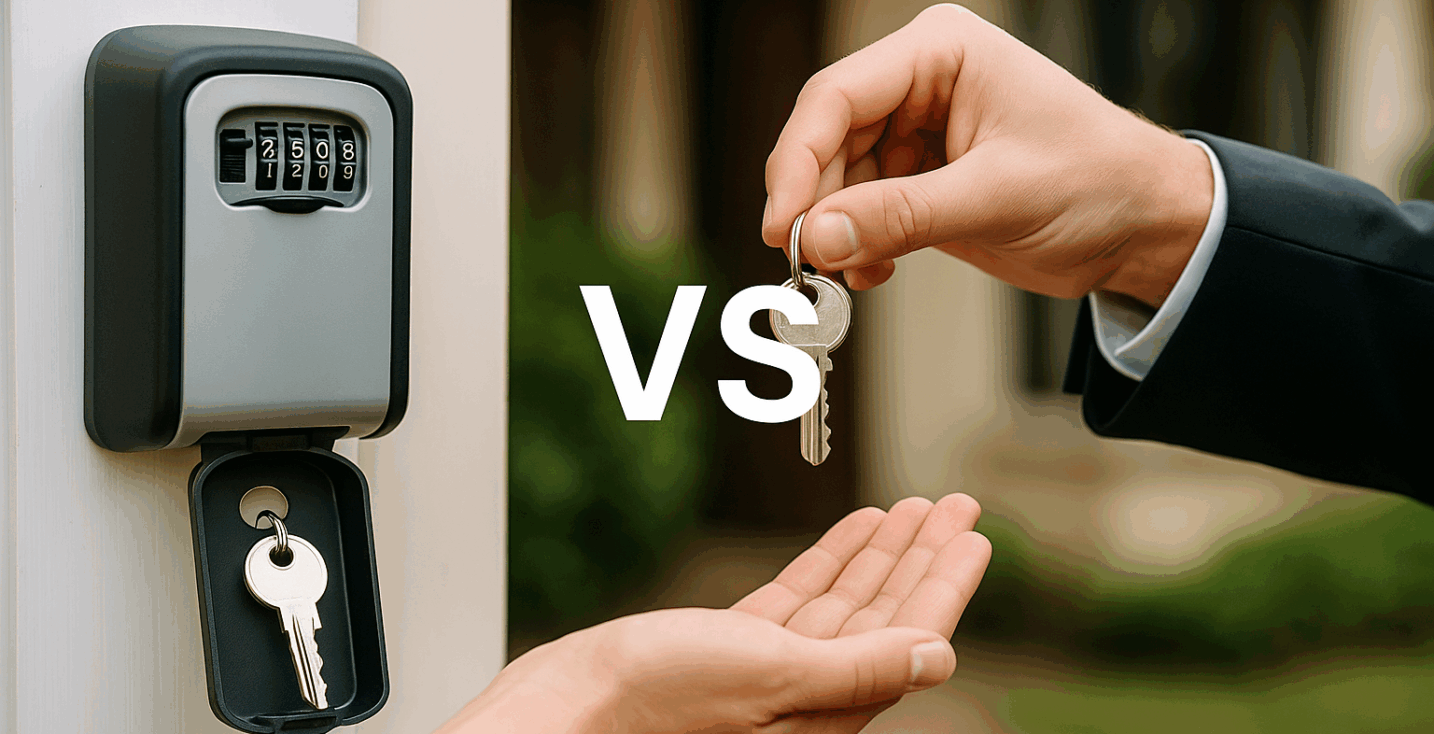
Une des premières questions à se poser est : faut-il opter pour une boîte à clé ou une remise en main propre ?

At CLM - Conciergerie Locative de Meschers, nous avons choisi la remise en main propre, et voici pourquoi.
Ce choix, souvent négligé, peut avoir un impact majeur sur la sécurité de votre bien, votre tranquillité d’esprit et même sur votre couverture légale.


⚖️ 1. Deux méthodes, deux philosophies

🏠 Boîte à clés : la simplicité… mais à risque

Une boîte à clés est un petit coffre fixé à l’extérieur du logement, dans lequel on laisse les clés à disposition des voyageurs.
C’est pratique, surtout pour les arrivées tardives, mais cela revient à donner accès à votre bien sans contrôle humain.

Les problèmes fréquents :

  • Code partagé entre voyageurs (amis, proches, sous-location).
  • Impossibilité de vérifier le nombre de personnes arrivant réellement.
  • Risque de vol ou de squat si le code circule ou si la boîte est forcée.
  • Pose souvent interdite sur l’espace public (façade, grille, muret).

Certaines communes ont même commencé à interdire les boîtes à clés pour raisons de sécurité et d’urbanisme.
👉 TF1 Info – Boîtes à clés interdites dans certaines villes


🤝 Remise en main propre : la méthode sûre et humaine

Avec une remise en main propre, un représentant de la conciergerie accueille les voyageurs, vérifie les identités, remet les clés et effectue un rapide état des lieux.
C’est la méthode privilégiée par CLM - Conciergerie Locative de Meschers, car elle garantit :

  • ✅ un accueil chaleureux et professionnel,
  • ✅ un contrôle d’identité réel,
  • ✅ une vérification du nombre de voyageurs,
  • ✅ la prévention des abus (sur-occupation, nuisances, etc.),
  • ✅ une sécurisation juridique en cas de litige.

En bref, vous gardez la maîtrise de qui entre chez vous.


🚨 2. Le vrai risque des boîtes à clés : le squat déguisé

On parle souvent de “squat” pour désigner une intrusion illégale dans un logement vide.
Mais un locataire saisonnier entré avec autorisation peut aussi refuser de partir à la fin du séjour.
👉 C’est là que la loi anti-squat (n° 2023-668 du 27 juillet 2023) atteint ses limites.

⚖️ Ce que dit la loi

  • La nouvelle loi permet une expulsion accélérée des squatteurs sans droit ni titre (intrusion).
  • Mais si la personne est entrée avec un titre légitime (contrat de location, réservation Airbnb), elle n’est pas considérée comme squatteur au sens pénal.
  • Dans ce cas, le propriétaire doit passer par une procédure civile classique, souvent longue.

👉 Lire l’analyse sur Montpellier Immo9
👉 Explication sur The Clearway Group

En résumé : si un voyageur entre avec un code de boîte à clé et refuse de partir, la procédure devient complexe.
Avec une remise en main, la situation est bien mieux encadrée (preuve de départ, contrat signé, état des lieux, etc.).


🧭 3. Choisir une conciergerie : les bons critères

Si vous déléguez la gestion à une conciergerie, assurez-vous qu’elle :

  1. ✅ Pratique la remise en main propre ou à minima un check-in contrôlé,
  2. ✅ Dispose d’un registre de voyageurs conforme aux obligations,
  3. ✅ Fournit un contrat clair entre vous, le locataire et la conciergerie,
  4. ✅ Possède une assurance responsabilité professionnelle,
  5. ✅ Sait gérer les urgences (perte de clé, départ anticipé, incident).

C’est exactement l’approche de CLM - Conciergerie Locative de Meschers, qui agit comme votre relais local :
→ accueil personnalisé,
→ contrôle des entrées/sorties,
→ sécurité juridique et matérielle,
→ assistance complète pour vous comme pour vos voyageurs.


🔒 4. Comparatif rapide

CritèreBoîte à clésRemise en main propre (CLM)
Sécurité🔴 Code partageable🟢 Contrôle direct
Respect du contrat🔴 Peu de vérification🟢 Contrôle systématique
Risque squat🔴 Plus élevé🟢 Fortement réduit
Relation client⚪️ impersonnelle🟢 humaine et locale
Image du logement⚪️ standard🟢 haut de gamme
Conformité légale🔴 parfois limite🟢 totale (preuve de remise)

💬 5. Notre position chez CLM

At CLM - Conciergerie Locative de Meschers, nous préférons prévenir plutôt que guérir.
La remise en main propre, c’est un moment d’accueil, de confiance et de contrôle qui protège à la fois le propriétaire, le bien et les voyageurs.

En choisissant CLM, vous bénéficiez :

  • d’une remise en main systématique,
  • d’un check-in rigoureux,
  • d’un suivi humain et local,
  • et d’une tranquillité d’esprit qu’aucune boîte à clé ne peut offrir.

🚀 Conclusion

Choisir la bonne conciergerie, ce n’est pas seulement une question de confort — c’est un choix de sécurité et de confiance.
La boîte à clés simplifie, mais expose.
La remise en main, elle, protège et valorise votre bien.

Sur la Côte de Beauté, CLM - Conciergerie Locative de Meschers se distingue par son approche humaine, rigoureuse et conforme à la législation.
👉 Propriétaire ? Contactez-nous pour découvrir comment notre méthode de remise en main peut sécuriser vos locations tout en améliorant l’expérience de vos voyageurs.

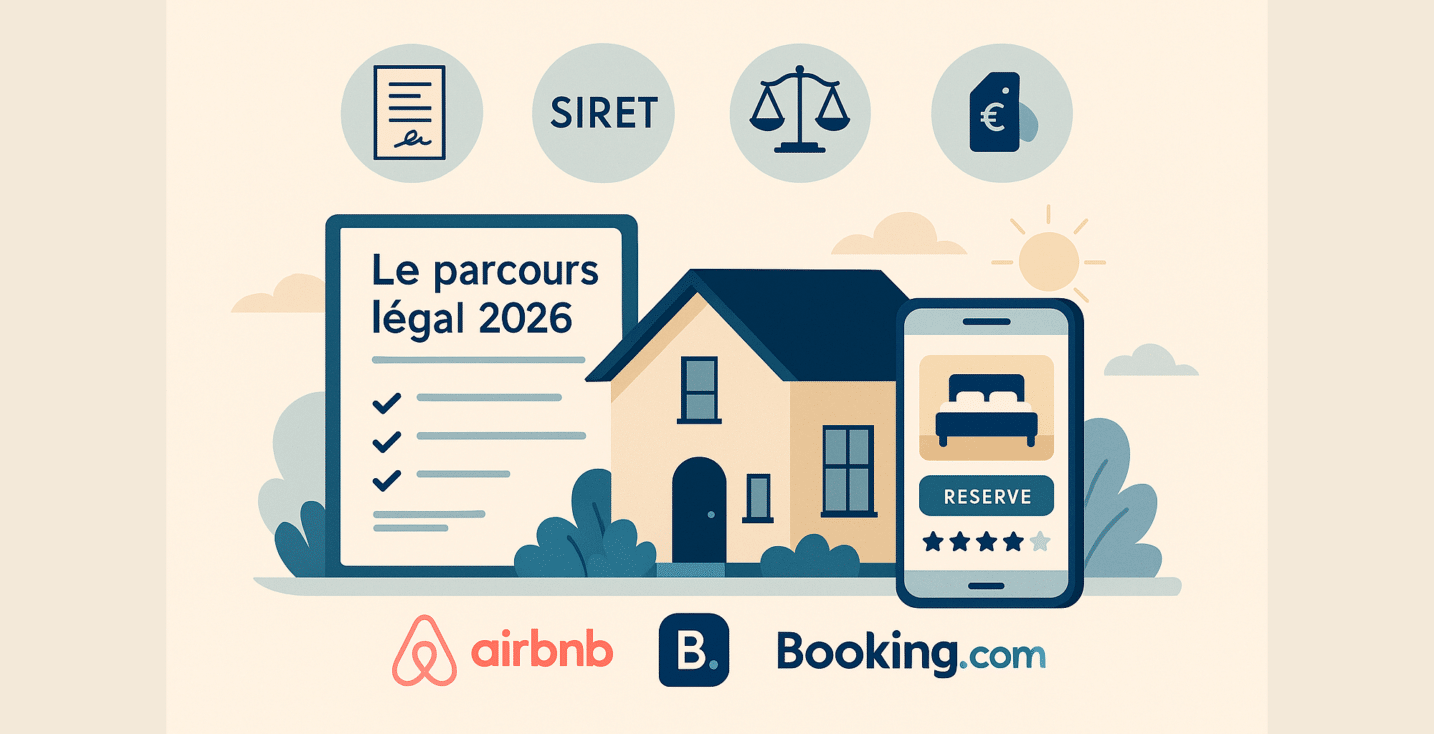
The 2026 legal route: renting your accommodation on Airbnb, Booking or Abritel in full compliance

Vous souhaitez louer votre logement sur Airbnb, Booking or Abritel, tout en restant parfaitement en règle avant de confier la gestion à CLM - Conciergerie Locative de Meschers ?

Visit le parcours légal le plus simple possible, mis à jour pour 2026, étape par étape, avec tous les liens officiels.


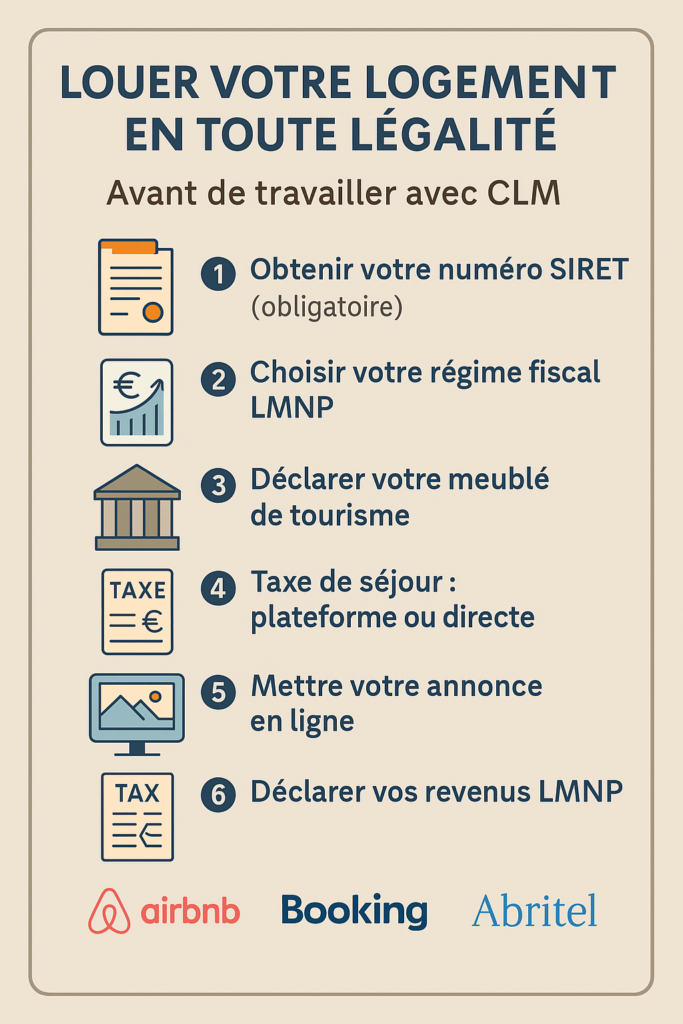
1️⃣ Obtenir votre numéro SIRET (obligatoire pour toute location meublée)

Pour louer un logement meublé, même quelques jours par an, vous devez avoir un SIRET number.
Ce numéro vous inscrit automatiquement au statut LMNP (Loueur Meublé Non Professionnel).

✔️ Demande 100 % en ligne :
👉 https://procedures.inpi.fr/?/declaration-p0i

Lorsqu’on vous demande l’activité, sélectionnez :
6820A – Location de logements meublés

Référence officielle :
👉 https://www.entreprises.gouv.fr/fr/meubles-de-tourisme

ℹ️ CLM peut vous assister si vous n’êtes pas à l’aise avec l’inscription.


2️⃣ Choisir votre régime fiscal LMNP (Micro-BIC ou Réel) – Version 2026

Une fois votre SIRET obtenu, vous devez choisir un régime fiscal.

Depuis la réforme 2025/2026, les règles changent selon le type de location :


Micro-BIC (régime par défaut)

👉 Pour un meublé de tourisme not classified (Airbnb, Booking, Abritel)

  • Plafond micro-BIC : 15 000 €/an
  • Abattement : 30 %

➡️ Au-delà de 15 000 €, micro-BIC impossible, vous passez au réel obligatoire.


👉 Pour un meublé de tourisme listed ou location meublée longue durée

  • Plafond micro-BIC : 77 700 €
  • Abattement : 50 %

Régime réel (sur option ou obligatoire si recettes > 15 000 € non classé)

Vous pouvez déduire :

  • travaux,
  • intérêts d’emprunt,
  • ameublement,
  • amortissement du logement,
  • conciergerie, ménage, charges,
  • taxe foncière…

➡️ Le réel est souvent le plus avantageux pour la location saisonnière.

Informations officielles :
👉 https://www.impots.gouv.fr/location-meublee


3️⃣ Déclarer votre meublé de tourisme en mairie

La déclaration est obligatoire pour toute location saisonnière dans la plupart des communes de la Côte de Beauté, notamment :

✔️ Page officielle simple (formulaire + explications) :

👉 https://www.service-public.fr/particuliers/vosdroits/R14321

Formulaire Cerfa direct (14004*04) :
👉 https://www.formulaires.service-public.fr/gf/cerfa_14004.do

ℹ️ CLM peut le remplir avec vous.


4️⃣ Taxe de séjour : automatique ou déclaration manuelle

✔ Si vous louez via Airbnb, Booking, Abritel

La plateforme :

  • calcule automatiquement la taxe,
  • la collecte auprès du voyageur,
  • la reverse à la collectivité.

👉 Vous n’avez aucune action à réaliser.


✔ Si vous louez en direct (site personnel, bouche-à-oreille, clientèle locale)

Les communes du territoire utilisent la plateforme officielle : 👉 https://royanatlantique.taxesejour.fr

Vous devez :

  1. créer un compte,
  2. declare your overnight stays,
  3. régler la taxe due.

ℹ️ CLM peut vous accompagner dans la création et l’utilisation du compte, sans intervenir dans les paiements (Hoguet law).


5️⃣ Mettre votre annonce en ligne (CLM peut tout gérer)

CLM peut s’occuper de :

  • créer ou optimiser votre annonce Airbnb / Booking / Abritel,
  • réaliser des photos efficaces,
  • rédiger un texte attractif,
  • paramétrer calendrier, prix, restrictions,
  • synchroniser vos canaux de réservation.

👉 Vous pouvez tout déléguer.


6️⃣ Déclarer vos revenus LMNP (1 fois par an)

Dans votre espace impots.gouv.fr, rubrique :
👉 “Revenus industriels et commerciaux non professionnels (BIC)”

Documentation officielle :
👉 https://www.impots.gouv.fr/location-meublee

ℹ️ CLM peut vous fournir les montants à déclarer et vous indiquer la ligne exacte.


7️⃣ Les assurances indispensables du propriétaire (LMNP)

Avant d’accueillir votre premier voyageur, vérifiez que votre logement est assuré pour l’activité saisonnière.

✔ Assurance Propriétaire Non-Occupant (PNO)

Indispensable pour :

  • dégâts des eaux, incendies, explosions,
  • dommages en votre absence,
  • responsabilité civile du propriétaire,
  • recours des locataires,
  • relogement / pertes d’exploitation selon contrat.

✔ Assurance RC du propriétaire bailleur

Souvent incluse dans la PNO.

✔ Assurance RC Professionnelle de la conciergerie (CLM)

Protège contre :

  • dommages lors des prestations,
  • interventions,
  • gestion locative.

Résumé pratique (version 2026)

ÉtapeActionLien
1Obtenir un SIREThttps://procedures.inpi.fr/?/declaration-p0i
2Choisir Micro-BIC / Réelhttps://www.impots.gouv.fr/location-meublee
3Déclarer le meublé en mairiehttps://www.service-public.fr/particuliers/vosdroits/R14321
4Taxe via plateformesAutomatique
4 bisTourist tax https://royanatlantique.taxesejour.fr
5Mise en ligne de l’annonceCLM
6Déclaration LMNP annuellehttps://www.impots.gouv.fr/location-meublee

Conclusion

With CLM - Conciergerie Locative de Meschers, vous louez :

✔ en toute conformité,
✔ simplement,
✔ avec un accompagnement local, humain et professionnel,
✔ sans perdre de temps dans l’administratif.

Vous êtes propriétaire à Meschers, Royan, Saint-Georges ou alentours ?
➡️ Nous pouvons vous accompagner dès aujourd’hui.

Carte G and rental concierge services: do the Hoguet Act apply to me?

Holiday rental management is attracting more and more property owners to Royan, Meschers and the Côte de Beauté. But one question often comes up: Do I need a G card to manage a furnished rental property?
At CLM - Conciergerie Locative Meschers, We know that the answer depends on the role the concierge plays in rent collection. Here's a clear guide to understanding Hoguet Act and find out if you are affected.


⚖️ What is the Hoguet Act?

La loi Hoguet (1970) provides a framework for the real estate professions: agents, trustees and managers.
In particular, it requires carte professionnelle “G” (property management) for anyone who :

  • Collects rent on behalf of a landlord,

  • Manages the contracts and accounts relating to these rents,

  • Issues receipts.

👉 In other words, if a concierge service collects money from tenants before passing it on to the owners, it must have a clear G card.


🏠 Concierge services: when do you need a G card?

  • No G card required if :

    • The owner collects the rent directly (by bank transfer or credit transfer). Stripe Connect).

    • The concierge only charges the owner for its services (commission, cleaning, reception, etc.).

    • The concierge service simply posts ads (like Leboncoin or Airbnb).

  • ⚠️ G card required if :

    • The concierge collects the rent on behalf of the landlord.

    • After deducting its commission (see Service-public.fr).


📌 Concrete example

  • Without G card (LMNP legal model)

    • The tenant books a stay for €800.

    • The owner collects directly via Stripe.

    • The concierge issues an invoice for €160 (20 % commission) to the owner.

  • With Carte G (intermediation)

    • The concierge service will receive €800.

    • It keeps €160 and pays €640 to the owner.

    • → This practice legally requires a G card.


🔑 What you need to know

  • La G card does not apply to LMNP owners (see impots.gouv.fr).

  • It only applies to service providers who handle rent money.

  • A concierge service can be outside the Hoguet Act if the financial flow is well structured.

At our concierge at Meschers-sur-Gironde and Royan, We have chosen a transparent model:
👉 The owners remain LMNP, collect their rent directly, and we simply invoice our concierge services.


🚀 Conclusion

The Hoguet Act is not an obstacle to letting your property with peace of mind.
With a compliant model, you stay LMNP owner, You don't need a G card, and you benefit from turnkey management.

At CLM - Conciergerie Locative Meschers, We have chosen transparency:
👉 You collect your rent directly, we simply invoice you for our services.

➡️ Would you like to find out more about rental management without a G Card in Royan and Meschers? [Contact us today]